Pages

Thursday, 3 January 2019

Some Books About… ELVIS PRESLEY


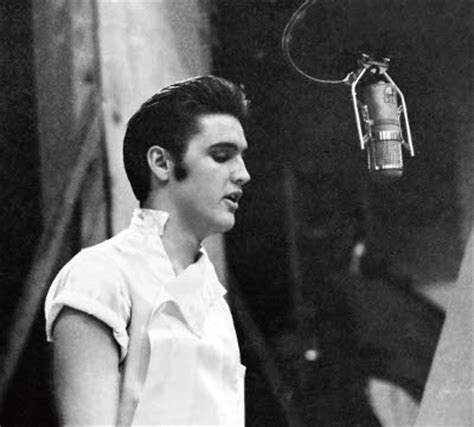
ELVIS PRESLEY  
c 1957


Elvis Presley once held the record for being the most frequently photographed celebrity in the world and the same claim could also be made for him being the most frequently written about celebrity in the world.  The sheer quantity of Presley-related literature –– ranging from tawdry tabloid shockers that focus on his drug addiction and/or fame-induced weirdness to heartfelt memoirs penned by friends and family to more scholarly efforts which attempt to dissect and analyze his enduring appeal –– is so vast that it can be difficult to separate what is actually worth reading from what is merely forgettable or, at worst, unnecessarily salacious and intentionally misleading.  For this reason I've limited my selections to books I've personally read since discovering his music at the age of ten and becoming, as I remain to this day, fascinated by it and the unprecedented cultural phenomenon he so rapidly became following the release of his debut RCA single in January 1956.


HEARTBREAK HOTEL
ELVIS PRESLEY
Performed live on The Milton Berle Show
3 April 1956 


Eel Pie Publishing UK, 1982


Elvis: The Complete Illustrated Record (1982) by ROY CARR and MICK FARREN

This book, co-written by two respected British music journalists, lists 'every official Elvis release in chronological order accompanied by composer credits, matrix number, catalogue number, month and year of release, personnel (where known), studio location, precise date of recording and a critical commentary.'  A mammoth undertaking which, in addition to serving as the definitive Presley discography until the advent of the digital age, is also packed with photographs from every phase of the singer's career, often accompanied by short summaries of what was concurrently occurring in it as well as in his sometimes turbulent personal life.  

The book is notable for the quality of its writing, the intelligence of the opinions it offers (some of which I strongly disagree with) and its attempt to move beyond the myths surrounding Presley and reveal him as what he was for more than twenty years –– a hard-working professional musician, actor and live performer whose personal problems rarely affected the quality of the product he created or the consistency of the concerts he gave right up to the end of his life.  (And yes, I'm aware that my 'quality' claim is open to debate, particularly when discussing some of the more ridiculous recordings he released during his later Hollywood period.)  Approximately the same size as a vinyl LP and clocking in at a colorful and generously spaced 192 pages, complete with short sections covering spoken word, bootleg and mail order recordings, Elvis: The Complete Illustrated Record remains –– along with the two Peter Guralnick biographies discussed below –– the one Presley book I find it indispensable to own given the sheer wealth of information it contains about his music and how it was created, packaged and marketed to a fanbase for whom too much of 'The King' was never enough.


Elvis: The Complete Illustrated Record is no longer in print. 


Ballantine Books US edition, 1977


Elvis: What Happened? (1977) by STEVE DUNLEAVY (as told to by RED WEST, SONNY WEST and DAVE HEBLER)

This still rates as one of the most shocking (if not most lurid) Presley biographies, published just two weeks prior to his death on 16 August 1977 from what was widely reported at the time as being 'a suspected drug overdose.'  Written by Steve Dunleavy, an Australian journalist who would go on to become one of the creators of tabloid television, it examines the singer's life through the eyes of three recently fired members of his so-called 'Memphis Mafia' who felt hurt and betrayed that their years of loyal service had been abruptly terminated for economic reasons by a man they claimed to have loved like a brother.  And Presley did himself no favors by having his father Vernon fire them rather than seeing to the task himself.  What hurts us only hurts us more when the blow is delivered second-hand. 

Red West had been with Presley right from the beginning, having become his self-appointed protector when they attended the same Memphis high school in the late 1940s.  West's cousin Sonny joined his team of bodyguards in 1960 while Dave Hebler, a former karate instructor, did so twelve years later.  They clearly had a score to settle with their former boss, prompting them to make what were, at the time, shocking allegations about his large daily intake of prescription medications, his love for and sometimes irresponsible use of firearms (they were the first to reveal his entirely understandable penchant for shooting television sets) and his plans to have Mike Stone, the lover of his ex-wife Priscilla, assassinated by a mafia hitman.  Confronting stuff for Presley fans, most of whom, like my naïve eleven year old self, preferred to dismiss their revelations as the product of revenge fueled invention.

The publication of the book, which Presley's manager Colonel Tom Parker tried to stop by offering the Wests and Hebler a quick cash settlement, couldn't have been better timed from a publicity point of view.  After years of being routinely ignored by the media, the singer's death had suddenly thrust him back into the spotlight, with fans and non-fans alike struggling to understand what had gone so wrong in his life to cause it to end so ignobly in the bathroom of his Graceland home at the age of forty-two.  Elvis: What Happened? seemed tailormade to answer that question despite being a hastily written, non-chronological stew of factual inaccuracies which contained no corroborating references or as much as one attributive footnote.

But does this mean that the book itself isn't worth reading?  Not necessarily.  While it is, for the most part, a mean-spirited project published for a specific commercial purpose, it nevertheless provides a fascinating if sometimes grotesque insight into the character of a man who, for all his fame and talent, was a deeply insecure individual who preferred to hide from the world surrounded by sycophantic hangers-on who catered to his every whim, no matter how outlandish or just plain bizarre those whims may have been.  Most of its allegations have since been confirmed by others in the singer's inner circle, making it not so much a collection of outright lies as a collection of unpalatable truths selectively cherry-picked to titillate a public that revels in scurrility.  Rarely if ever does it address Presley's work as a musician whose best work had a profound and lasting impact on the course of popular culture.  It prefers, as such exposés generally do, to wallow in the mire of drug abuse and self-destructive behavior that his over-indulged and extremely isolated existence had undoubtedly become by the summer of 1977. 

Red West would come to regret having participated in the project, telling George Klein, another Presley insider who published his own book about his time with 'The King' in 2010, that 'he hated "the damn book" and wished that he'd never had anything to do with it.  He said that since the day the book came out, it had been nothing but a nightmare for him.'  Sadly, it was only the first of what became a long list of such nightmares, with the hatchet job industry reaching its reputation destroying nadir with a 1981 biography by Albert Goldman, titled simply Elvis, in which he sneeringly accused the singer of being, among other things, a pervert and voyeur whose legendary promiscuity was nothing more than a desperate attempt to deny and disguise his rampant homosexuality.  Goldman offered no substantive proof to support these claims, preferring to allow his obvious hatred of his subject to take precedence over solid research and the provision of verifiable facts.


Elvis: What Happened? is no longer in print and has now become something of a collector's item.  Used copies range in price from $40 USD to $500 USD.


Grosset and Dunlap first US edition, 1976


The Illustrated Elvis (1976) by WA HARBINSON

This was the first Presley book I ever owned or read, given to me by my parents while we were holidaying in the United States a little over a month after the singer's death.  As a boy I was fascinated by the wealth of photographs it contained, all of which are printed in black and white and include the now iconic shot of Presley in overalls and hat standing between his seated parents Vernon and Gladys, snapped when he was a toddler.  It also includes his high school graduation picture, showing the sharply dressed, pimple-faced youth who would soon enter Sun Recording Studios in Memphis to cut a self-funded single as a birthday gift for his mother, his performance impressive enough to prompt Marion Keisker, the studio receptionist, to retain his name, address and telephone number and pass them along to her boss Sam Phillips with a note reading 'Good ballad singer.'

While the book is a competent pre-scandal biography, reeling off what were then the known facts about Presley's life and career –– his birth in Mississippi on 8 January 1935 and the haunting death of his twin brother Jesse Garon on the same day, his family's move to Memphis and his job as an apprentice electrician at that city's Crown Electric Company, his growing regional fame following the release of That's Alright, Mama on the Sun label in 1954 –– in a smoothly flowing journalistic style, Harbinson takes what, in 1976, was the unusual step of attempting to place Presley's achievements as a performer into a wider cultural context, using quotes by Bob Dylan and Don Maclean, among others, to support his thesis that his subject was a prisoner of his own celebrity long before this became the all-too-common phenomenon the world is so familiar with today.  It makes an interesting contrast to the intentionally damning portrait of Presley painted by his former bodyguards in Elvis: What Happened?, arguing the case for his status as a cultural icon at least a decade before anybody else had dared to speak of him or his extensive body of work in such exalted terms.


The Illustrated Elvis is no longer in print.  


Simon & Schuster US edition, 1971


Elvis: The Biography (1971) by JERRY HOPKINS  

I find it slightly amazing, given his immense popularity, that no one had ever written a 'serious' biography of Presley prior to the publication of the original version of this book in 1971.  (A revised edition was published in 2007, combining it with its 1981 sequel Elvis: The Final Years and a newly written chapter examining the singer's posthumous musical and financial legacies.)  Until the first volume of the Guralnick biography appeared in 1994 it was considered the go-to biographical reference for anybody eager to move beyond the prevailing public image of Presley as a tired old has-been who was stretching out what was left of his career by playing two shows per night to squealing middle-aged women in Las Vegas.  It depicted him as an artist in resurgence at a time –– the first year of the new decade –– when he was viewed as an embarrassment by the vast majority of North American music critics and as an irrelevant joke by a teenage record buying public still reeling from the unexpected break-up of The Beatles.

Hopkins was encouraged to write his well-balanced, scandal-free biography by Jim Morrison, charismatic lead singer of US rock band The Doors whose own death in a Paris hotel room in July 1971 remains shrouded in mystery to this day.  Morrison had been fascinated by Presley as a teenager, particularly by his seemingly effortless ability to whip audiences into a frenzy by using movements copied from the fire and brimstone Baptist preachers whose sermons had been a regular feature of his pious, church-going youth.  (Presley once claimed, and not without justification, to have known by heart every gospel song ever written.)  Hopkins took his advice and dedicated the finished book to Morrison, no doubt pleased to see it become a respectfully reviewed bestseller that certainly remains worth reading for those who may be put off by the more detailed (and sometimes heartbreaking) Guralnick biographies.  Its success prompted Hopkins to write No One Here Gets Out Alive, the first biography of Jim Morrison which also became a runaway bestseller when it was published by Warner Books in 1980.


The 2007 revised edition of Elvis: The Biography may still be obtainable from your local library, bookstore or preferred online provider.  Sadly, its author JERRY HOPKINS died on 3 June 2018 of heart failure, leaving behind a legacy of more than thirty published works of non-fiction which includes two more Presley-related items ––  Elvis in Hawaii (2002) and Aloha Elvis (2007).


Little Brown first US edition, 1994


Last Train To Memphis: The Rise of Elvis Presley (1994) by PETER GURALNICK

The publication of Last Train To Memphis and its companion volume, which followed it five years later, fulfilled a long-held private dream of mine.  For years I had yearned for someone to write a fair but honest book about Elvis Presley that would do justice to his work both in and out of the recording studio and neither downplay nor needlessly sensationalize what, to my mind, ranks as the peculiarly North American tragedy his life became due to his inability (or unwillingness, opinion remains divided on this point) to take control of his own career.  Presley is the classic example of an artist who allowed other people to make his most important artistic decisions for him because he preferred to avoid conflict and lacked the necessary faith in his own judgment to insist on recording the material he wanted to record rather than what was deemed to be 'commercially viable' by his manager and record label.  While adhering to this policy made him famous and wealthy beyond his wildest dreams, it also deprived him of the opportunity to grow as a performer by interacting with musicians who were automatically denied entry to what was his lucrative if musically restrictive comfort zone.  Guralnick, a much-awarded music journalist who has written many books about blues, country, R&B and soul music (all of which were crucial formative influences on Presley's music), seems to possess an innate understanding of what this policy of non-engagement cost his subject in both musical and personal terms and writes about his life honestly but never without compassion or respect for his humanity. 

Last Train To Memphis covers the period between Presley's birth and his departure, as newly drafted US GI 53310761, for Germany in September 1958 a few weeks after the death of his beloved mother Gladys.  These were the glory years which saw him move from being a regional sensation to a national star to an enduring international celebrity and, for a time, the highest paid actor in Hollywood.  It was a whirlwind ride and Guralnick does a superb job of recreating it, showing Presley as the product not only of his dirt poor rural and urban childhood (he reveals, for example, that Vernon Presley served an eight month prison sentence in 1937 for altering the amount on a check given to him in payment for a hog) but also of the traditional southern institutions of church, home and family which did so much to form both his character and his love of music.  He likewise does an excellent job of placing Presley's influences –– which ranged from black blues artists like Arthur 'Big Boy' Crudup to country artists like Hank Snow and Eddy Arnold to black vocal groups like The Ink Spots to popular crooners like Dean Martin –– into context, showing why spending his late childhood and early teenage years in a musically open city like Memphis, with its rich heritage of both secular and sacred music and its frequent if unadmitted mingling of white and black cultures, was instrumental in making him the wildly successful performer he eventually became.


Little Brown first US edition, 1999


Careless Love: The Unmaking of Elvis Presley (1999) begins with Presley's return from the Army in March 1960 after a seventeen month stint in Germany where he had served as a member of the Third Armored Division, eventually rising to the rank of Sergeant.  Guralnick leads us through the ensuing years –– the return to Hollywood and the damage that remaining on its formulaic treadmill did to his career and artistic credibility, his 1967 marriage to Priscilla Beaulieu and the birth of their only child Lisa-Marie virtually nine months later to the day, his 1968 television comeback special and subsequent conquering of Las Vegas (where he had flopped spectacularly when he appeared there in 1956), his 1973 divorce and the increasingly damaging behavior that preceded his untimely death –– without succumbing to the need to moralize or point the finger of blame, as so many other biographers have before him, at the shadowy figure of his manager, a canny Dutch immigrant and former carnival barker who re-invented himself as 'Colonel' Tom Parker.  

Guralnick is particularly effective when it comes to untangling what was Presley's complicated and sometimes fractious relationship with Parker, a man well known for putting business first and everything else, especially his client's musical integrity, second.  He shows that Parker was no more capable of preventing his client from destroying himself than anybody else was, that the singer was as much the victim of his own ego as he was of his addictions to drugs, food and the profligate spending of money –– a commodity that was in increasingly short supply until his death triggered a surge in his record sales, ensuring he remained one of the top selling recording artists of all time.

These are the two biographies that every Presley fan and anybody even remotely interested in understanding the Western world's ongoing obsession with celebrity need to read.  As journalist and novelist Nick Tosches so eloquently put it:  'In a work of lucent prose and rare perception, Peter Guralnick has given us not only the definitive biography of Elvis Presley, but also a luminous portrait of the America that made, and was in turn swayed by him.'


Last Train to Memphis: The Rise of Elvis Presley and Careless Love: The Unmaking of Elvis Presley may still be obtainable from your local library, bookstore or preferred online provider.


Collier Books UK edition, 1979


Elvis '56: In the Beginning (1979) by ALFRED WERTHEIMER

In March 1956 a young New York-based freelance photographer named Alfred Wertheimer was called by Anne Fulchino, head of Public Relations at RCA Records, and asked if he was free to take some shots of Elvis Presley, an exciting new vocalist the company had recently signed.  'Elvis who?' Wertheimer replied.  'I'd never heard of the man,' he later confessed to a reporter from Time magazine.  'He didn't have a gold record yet.' 

Wertheimer nevertheless accepted the assignment, which saw him shoot over 2000 candid photographs of Presley on three separate occasions, beginning with the singer's fifth television appearance on Jackie Gleason's Stage Show, a variety program then being hosted by jazz musician brothers Tommy and Jimmy Dorsey, and ending with a self-funded trip to Memphis to observe him relaxing at home with friends and family.  The majority of these photographs remained unpublished and uncollected until 1979, when a relatively small number were finally made available to the ravenous Presley fanbase by Collier Books.

The photographs are, as they were in 1979, a revelation, showing a very different Presley to the carefully groomed and slickly marketed star he became within months of his career taking off and would remain until his death.  They capture him, as one online reviewer so astutely put it, before the craziness began, when he was a strikingly dressed young man from Memphis who could still eat a meal in a diner like an ordinary person and find time to kiss a girl in a dimly lit stairwell before taking the stage.  This is the Presley that many of his fans like to remember and rightly so in my opinion, given what he achieved in terms of both record sales and popularity in the months following the release of Heartbreak Hotel.  Elvis '56 offers us a rare glimpse of a performer who had no inkling of what lay ahead of him over the next twenty-one years, a wide-eyed boy who could still enjoy his newfound celebrity because he had yet to become imprisoned and enslaved by it. 

'The wonderful thing about Elvis,' Wertheimer later recalled, 'was that he permitted closeness.  Later on, I found out he also made the girls cry.  Those were the two qualities that made him different from other performers I had met.  Others would let you to come within six or eight feet, but that was it. They'd get nervous, or they'd start to ham it up.  Not Elvis.  He was always just himself.'  It could be argued that he was never allowed to be himself quite so freely again, making these photographs all the more valuable as a record of an artist on the cusp of musical immortality.


Elvis '56: In the Beginning is no longer in print.  A new book titled Alfred Wertheimer, Elvis and the Birth of Rock and Roll –– edited by CHRIS MURRAY with a contributory essay by ROBERT SANTELLI –– was published by Taschen Books GmbH in 2015.


RUN ON
ELVIS PRESLEY
from the 1967 RCA LP
How Great Thou Art
One of my favorite Presley tracks from the gospel
album for which he won his first ever Grammy Award 


You might also enjoy:


Words for the Music 012: JIM MORRISON


Some Books About… MODS!  


Some Books About… TONY HANCOCK


Last updated 16 October 2021 § 

Thursday, 27 December 2018

Poet of the Month 052: CARSON McCULLERS


CARSON McCULLERS 
 c 1952


WHEN WE ARE LOST


When we are lost what image tells?
Nothing resembles nothing.  Yet nothing
Is not blank.  It is configured Hell:
Of noticed clocks on winter afternoons, malignant stars,
Demanding furniture.  All unrelated
And with air between.


The terror.  Is it of Space, of Time?
Or the joined trickery of both conceptions?
To the lost, transfixed among the self-inflicted ruins,
All that is non-air (if indeed is not deception)
Is agony immobilized.  While Time,
The endless idiot, runs screaming round the world.


December 1952


Lula Carson Smith was born on 19 February 1917 in the town of Columbus in western Georgia, the eldest child of Lamar Smith, a local jeweler, and his wife Vera Marguerite 'Bebe' Smith (née Waters).  Her brother Lamar Smith Jr followed her into the world in 1919 and was himself followed, in 1922, by her sister Margarita Gachet Smith.
 

McCullers, who dropped the 'Lula' from her name when she was thirteen, originally dreamed of becoming a concert pianist.  This ambition changed, however, when she contracted rheumatic fever in 1932 –– an event which persuaded her, along with the voracious reading she had done since early childhood, that she ought to become a writer. 
 

In September 1934 she left Georgia for New York City where she enrolled in writing courses at Columbia University, supporting herself by working odd jobs after losing the money she was given by her family in what would remain, until the end of her life, unexplained circumstances.  She returned to Columbia in 1935 to continue her studies and was followed there by a young soldier named Reeves McCullers Jr whom she had met in Georgia through a mutual friend the previous summer.  It was Reeves, now out of the army and studying at Columbia himself, who took her home to her family when she once again became seriously ill in November 1935.  Forced to spend weeks in bed recuperating, she began the story, at that time titled The Mute, that would eventually become her first novel The Heart is a Lonely Hunter.  
 

McCullers married Reeves in September 1937 and moved with him to North Carolina shortly after the ceremony where she continued to work on The Mute, eventually submitting an outline of the novel to a fiction contest run by Boston-based publishers Houghton Mifflin.  Her outline won her the contest's second prize of $500 and automatic acceptance of the book upon completion.  The Heart is a Lonely Hunter was published on 4 June 1940, making the twenty-three year old McCullers an overnight critical and commercial success, as popular with the notoriously hard to impress New York critics as she was (and continues to be) with readers all around the world.  By this time, however, she was separated from her husband, with whom she would continue to have a difficult on-again, off-again relationship until his death, by suicide, on 18 November 1953 in a Paris hotel room.  (They had divorced in 1941, only to remarry in 1945 in what proved to be a disastrous move for both of them.)
 

Although McCuller's second novel Reflections in a Golden Eye (1941), a story about obsessional love set on a military base, did not repeat the runaway success of her first novel her reputation was assured with the 1943 publication of the novella The Ballad of the Sad Café in the widely read fashion magazine Harper's Bazaar.  The story was reprinted in Best American Short Stories of 1944, a boost for her confidence which encouraged her to complete The Member of the Wedding, the novel many critics now believe to be her masterpiece. This book was published, again by Houghton Mifflin, to largely favorable reviews on 19 March 1946 and McCullers went on to successfully adapt it for the stage, with the dramatized version, starring Julie Harris, black jazz singer Ethel Waters and newly discovered child actor Brandon de Wilde, opening on Broadway on 5 January 1950 and running for 501 performances.  The cast repeated their roles in the 1952 film version directed by Fred Zinnemann, with the 27 year old Julie Harris earning an Academy Award nomination for Best Actress for her moving and convincing portrayal of the story's 12 year old protagonist Frankie Addams.
 

McCullers published what would be her final novel, Clock Without Hands, in 1960.  It was preceded by another play titled The Square Root of Wonderful, based in large part on her doomed marriage to Reeves, which premiered on 30 October 1957 and closed, to her great disappointment, after only 45 performances.  The fact that she was able to complete these works was nothing short of a miracle, given the atrocious state of her health which had been in gradual decline since the late 1930s and saw her suffer a stroke in 1947 that affected her ability to read and left her with a paralyzed left arm.  Now considered to be one of North America's greatest and most compassionate writers, she died on 29 September 1967 in Nyack, New York after suffering another brain hemorrhage that left her comatose for 47 days. 
 

Unlike many novelists, who often begin their careers as poets, McCullers did not start writing poetry until she was well into her thirties.  Nor was much of her work in this medium ever published during her lifetime.  As her sister Margarita explained in her notes for The Mortgaged Heart, a posthumous collection of her uncollected work that appeared in 1972, much of her poetry was left unfinished in 'handwritten manuscripts that are unclear.'  She did, however, give a few public readings of her poems over the years and also managed to record some of them for MGM Records prior to her death.  'I remember best one evening,' her sister wrote, 'at a university lecture.  After she had recited "Stone Is Not Stone" in her gentle Southern voice, there was a long silence.  Then suddenly a young student stood up and said, "Mrs McCullers, I love you".'


Use the link below read more about the life and work of North American novelist, playwright, essayist and poet CARSON McCULLERS:


Use these links to watch a 1956 interview with CARSON McCULLERS and view a news story about Lover Beloved: An Evening with Carson McCullers, a musical play based on her life and work conceived and performed by singer/songwriter SUZANNE VEGA.


You might also enjoy:


Poet of the Month 040: HELENE MULLINS


Poet of the Month 035: EDNA ST VINCENT MILLAY


Poet of the Month 025: JOSEPHINE MILES


Last updated 19 March 2021


Wednesday, 19 December 2018

The Women in Black (1993) by MADELEINE ST JOHN [Re-Post]


The Text Publishing Company, 2012


'I don't suppose you mean to make a career in the retail trade?' said Miss Cartright.
    'Oh, no!' cried Lisa.
    Miss Cartright laughed. 
  'It's quite all right, Lisa.  It doesn't suit everybody.  But as long as you are working here, you will be expected to work hard, and as if it were your permanent job.  Do you understand that?'
  'Oh, of course,' said Lisa, desperately.  'Of course; I do understand.  I'll work very hard.'
   And Miss Cartright, thinking it might be rather quaint to see the girl in such a context, decided to put her in Ladies' Cocktail, where she could give a hand to Magda in Model Gowns now and then because, although she looked so childish, she was evidently bright as well as willing, and might be quite useful, all things considered.


The Novel:  Shy, seventeen year old Lesley Miles has just finished her Leaving Certificate (the 1960s equivalent to today's SAT exam, Baccalauréat, GSCE A-Level or HSC, depending which part of the world you happen to call home).  Needing a job to keep her busy over the Christmas holidays and earn her a little extra cash while she awaits her exam results, she applies for a position as a Sales Assistant (Temporary) at Sydney's famous FG Goode Department Store ('Serving the People of Sydney since 1895').  Although she is unaware of it when she arrives for her interview –– where she daringly decides to write her name as 'Lisa' on the application form, replacing the long detested 'Lesley' she was christened by her mother –– the relatively short amount of time she will spend working behind the counter at Goode's will prove to be transformative for her and for her fellow 'women in black' in many pleasantly surprising but as yet unsuspected ways. 


She is sent, by the indomitable Miss Cartright, to work in the Ladies Cocktail department on the store's second floor, where she ably assists Miss Fay Baines, Mrs Patty Williams and Miss Jacobs –– its alterations specialist who has worked at Goode's 'since before the War' –– in their efforts to fit and clothe the bustling female hordes who descend upon them each sale time like swarms of bargain-hunting locusts.  Thanks to the whimsicality of Miss Cartright, Lisa is also called upon to occasionally assist the exotic and formidable Magda –– a newly-arrived immigrant with an unpronounceable Slovenian surname who also speaks fluent French –– otherwise known as the 'guardian of the rose pink cave of Model Gowns.'  Only the city's richest, most fashion-conscious (and silliest) women can afford to shop in Model Gowns, where they are sold one-off haute couture creations –– suitable for any cocktail party or similarly well-to-do social occasion –– by this enigmatic, ever-tactful and perpetually unflappable 'Continental' salesperson.    


Magda is unlike anybody the quiet and bookish Lisa has ever encountered before.  She speaks differently (because she is 'a New Australian'), dresses differently –– she is permitted to wear her own clothes to work, as long as they are black, rather than being forced to wear the unflattering black frock the store provides –– and discusses novels like Anna Karenina and French clothing designers with her as though she considers the newcomer her social, cultural and intellectual equal.  Magda more or less adopts Lisa during her time at Goode's, encouraging her in her ambition to become a poet (or an actress, Lisa has not yet quite decided which it will be) and inviting her to boisterous, fun-filled parties held at her tiny Cremorne flat.  In addition to sampling her first glass of wine and first slice of salami at one of these parties, Lisa is also introduced to Magda's husband Stefan and their livewire friend Rudi, newly arrived from Hungary via Melbourne, and to a clever boy her own age named Michael.  


But Magda does not confine herself to broadening the horizons of this yet-to-blossom school leaver.  She also invites Fay Baines –– twenty-nine years old, unmarried, a former would-be showgirl who has an unfortunate habit of falling in love with the wrong sort of men –– to her New Year's Eve party, introducing her to Rudi as per his request that Magda should find him 'a nice healthy Australian girl to marry.'  Even the unhappy home life of Patty Williams, childless and married to the taciturn and uninspired Frank, takes a turn for the better after Frank leaves her, only to return a fortnight later to discover that he no longer calls the shots in their new, sexually exciting marriage.  Only Miss Jacobs –– stolid, uncomplaining, solitary –– fails to be drawn into the spell that Magda's refreshing forthrightness appears to have cast over the lives of her delighted but somewhat flummoxed co-workers.  


But the spell, like all such spells, is quickly broken.  Lisa receives her Leaving results, which are excellent and promise a bright future for her at Sydney University if only she and her mother can persuade her stick-in-the-mud father to let her attend this hotbed of libertine sinfulness.  Happily they do, meaning, less happily, that Lisa must give up her job at Goode's.  Meanwhile, Fay becomes engaged to Rudi ('the nicest man I've ever met' is how she describes him to a disbelieving friend) and Patty, childless and miserable about it for so long, learns that she is finally pregnant.  Only Magda is left, biding her time in Model Gowns until she and the ever-charming Stefan can save enough money to allow her to open a shop of her own in swanky Double Bay.  


André Deutsch Ltd UK, 1993


The Women in Black is a slim little gem of a novel, a charming modern update of the Cinderella story that manages to be witty and positive while never losing its ironic edge or becoming crassly sentimental.  It captures the time and place in which it is set –– a quieter, far less pretentious Sydney doing its best to survive the Christmas/New Year 'retail rush' of 1960 and 1961 –– in a way that is wistful, engaging and at the same time elegantly satirical.  For anybody who grew up in Sydney in the 1960s (or even the 1970s or the 1980s) it will bring back fond memories of a time when the city's department stores seemed like treasure-laden palaces and the act of shopping itself was a perplexing, wearying but generally far more pleasurable experience than it often is today.  The world of FG Goode's Department Store –– based on the still-existing David Jones' Department Store that has been a beloved city institution since 1838 –– is a vanished world but no less appealing or intriguing for having been relegated so irretrievably to the past.  The Women in Black recreates a time when life was not necessarily better or easier but was certainly a lot simpler and, it might be ventured, a bit more fun for a variety of reasons. 


MADELEINE ST JOHN, c 1993


The Writer:  Madeleine St John was born in Sydney on 12 November 1941 but spent most of her adult life in London, the city in which three of her four published novels are set.  'I was brought up,' she once told a friend, 'on the idea that England was where I came from, in a deep sense where I belonged.  Australia was a deviation of one's essence.'  England, she added, '…was everything one had hoped for and continues to be so.'


St John (which she pronounced 'sin-jin' all her life in the supposedly 'true' English style) grew up in the genteel northern Sydney suburb of Castlecrag.  Her father Edward St John was a Queen's Councillor and a well-known Liberal politician who was considered something of a renegade by his party for speaking out against apartheid and in favour of other radical ideas like nuclear disarmament.  (He also gained attention for exposing the somewhat convoluted sex life of John Gorton, Australia's nineteenth Prime Minister).  Her mother Sylvette, born in Paris, was of Romanian-Jewish descent and unfortunately took her own life when Madeleine, who adored her, was twelve.  This event, she later confessed, 'obviously changed everything.'  Her father remarried and St John would live in what her half brother would call 'self-imposed exile' from him and his 'new' family for the remainder of her life.  She rarely discussed her family and only then, according to friends like Bruce Beresford, to draw attention to their alleged (but never conclusively proven) ill treatment of her.


After becoming a boarder at St Catherine's School in Waverley with her younger sister Collette –– an experience she likened to attending Lowood, the grim educational institution featured in Charlotte Brontë's 1847 novel Jane Eyre –– she went on to obtain a Master's Degree in English at Sydney University, where her friends and fellow students included Clive James, Germaine Greer, Les Murray, Robert Hughes, Bruce Beresford (who has just directed what was, for more than twenty years, his unproduced screen adaptation of The Women in Black retitled Ladies in Black) and the future maestro of Australian Shakespearean actors, the great John Bell.  She graduated in 1963 and almost immediately married a fellow student named Chris Tillam, moving first to Los Angeles and then to San Francisco with him so they could be together while he studied filmmaking.


In 1968 St John relocated to London, fully expecting that her husband would join her there once his studies were complete.  Tillam chose not to do this, so she lived a semi-bohemian existence in flats shared with a succession of her fellow Australian emigrés before finding a permanent home in what was, at that time, the seedy and somewhat down-at-heel suburb of Notting Hill.  During this period, while supporting herself as a bookseller, a clerk and sometimes as a secretary, she became a follower of an Indian mystic named Swami Jr, wore Indian clothes and, for a time, called herself by an Indian name.  But this flirtation with Eastern mysticism proved, in the end, to be a passing fad.  A devoted churchgoer all her life, St John soon began attending services again each Sunday as she had done, very unfashionably, throughout her university days. 


The Text Publishing Company, 2009


Firmly settled in London, St John spent eight years attempting to write a biography of Madame Blavatsky, the Russian-born co-founder of the spiritual system known as 'Theosophy,' before permanently abandoning the project some time in the early 1990s.  She wrote her first novel, The Women in Black, in six months –– she claimed that none of it was autobiographical, modestly explaining that she lacked the ability to 'pull off' such a feat –– and it was published by the UK firm of André Deutsch in 1993.  Three more novels –– A Pure Clear Light (1996), The Essence of The Thing (1997) and Stairway to Paradise (1999) –– followed, the last of which was shortlisted for the Booker Prize, making her the first Australian female author to be nominated for the award and a bugbear for certain members of the British literary establishment who took offence at her honest outsider's depiction of English mores and manners.  Her own reaction to the nomination was anything but self-aggrandizing.  'There are squillions of books out there,' she told a reporter.  'Who knows what the best six are?  It's not about me being brilliant.  It's about me being lucky… We won't know for a hundred years the truth about whether it's any good.  It's one of the things about literature; you just can't tell until you're dead.'


A heavy smoker all her life –– her tin of Virginia Gold tobacco remained within arm's reach on her night table right until the end –– Madeleine St John died of emphysema, in her beloved London, on 18 June 2006.  In addition to four well-regarded novels, she also left behind her Notting Hill flat, a few dozen assorted paperbacks, one hundred handwritten pages of an uncompleted manuscript and a will stipulating that none of her work should ever be translated into any foreign language.  She remained a mysterious, somewhat elusive figure even to her closest friends, a writer who seemed to value her privacy to the point of making a recluse of herself in order to protect it.    


Print and digital copies of The Women in Black and other novels by MADELEINE ST JOHN can be ordered directly from the Text Publishing website.


Another review of The Women in Black can be read on the blog The Resident Judge of Port Phillip. 


The long awaited BRUCE BERESFORD film adaptation of The Women in Black, retitled Ladies in Black, premiered in Sydney on 20 September 2018 and is currently on general release in Australia and many other parts of the world.  It stars ANGOURIE RICE as Lisa, JULIA ORMOND as Magda, RACHAEL TAYLOR as Fay Baines, NONI HAZELHURST as Miss Cartright, VINCENT PEREZ as Stefan, RYAN CORR as Rudi and ALISON McGIRR as Patty Williams.


You might also enjoy:


Originally posted 3 October 2013 


Last updated 16 March 2021 


Thursday, 13 December 2018

The Write Advice 115: EL DOCTOROW


It’s not calculated at all.  It never has been.  One of the things I had to learn as a writer was to trust the act of writing.  To put myself in the position of writing to find out what I was writing… The inventions of the book come as discoveries.  At a certain point, of course, you figure out what your premises are and what you’re doing.  But certainly, with the beginnings of the work, you really don’t know what’s going to happen…  
  It’s not a terribly rational way to work.  It’s hard to explain.  I have found one explanation that seems to satisfy people.  I tell them it’s like driving a car at night: you never see further than your headlights, but you can make the whole trip that way.

The Art of Fiction #94 [The Paris Review #101, Winter 1986]


Use the link below to read a 2015 article about North American novelist EL DOCTOROW (1931–2015):


https://www.theguardian.com/books/2015/jul/23/el-doctorow-great-american-novelist


You might also enjoy:

 
The Write Advice 093: BARRY HANNAH

 
The Write Advice 073: NADIA WHEATLEY

 
The Write Advice 033: TAMA JANOWITZ

Thursday, 29 November 2018

Think About It 042: CG JUNG


Loneliness does not come from having no people about one, but from being unable to communicate the things that seem important to oneself, or from holding certain views which others find inadmissible… If a man knows more than others, he becomes lonely… A creative person has little power over his own life.  He is not free.  He is captive and driven by his daimon.

Memories, Dreams, Reflections (1963)


Use the link below to visit The Jung Page, '…a place to encounter innovative writers and to enter into a rich, ongoing conversation about psychology and culture' created by Jungian psychoanalyst DON WILLIAMS in 1995:


http://cgjungpage.org/


You might also enjoy:

 
Think About It 038: LAURA RIDING

 
Think About It 021: ROLLO MAY

 
Think About It 014: DOROTHY ROWE